0.0 / 5.0 - (0 Ratings)

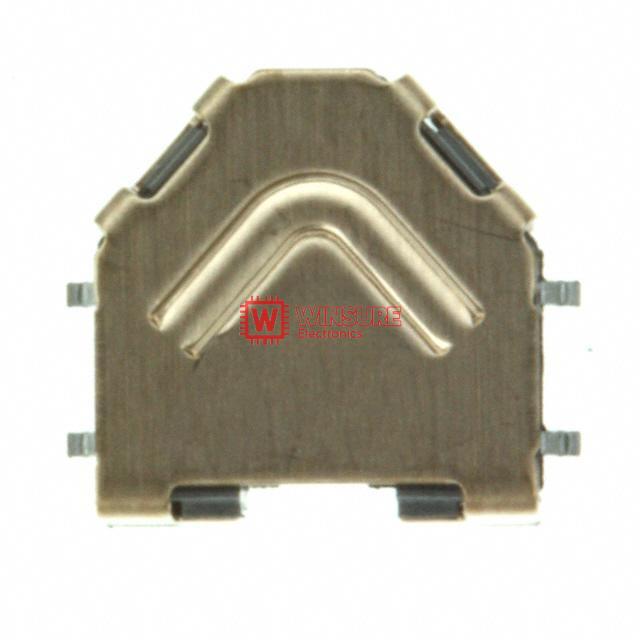
CW1300-1

Electronics Part Number

CW1300-1-WX

Manufacturer

Silicon Labs
CW1300-1

Description

Vibration Tilt Switch, 60V, 0.25A

Inventory

637 Pcs New Original In Stock
Advanced motion sensor transducers offering stable performance for vibration, tilt, and velocity measurement in harsh environments.
Quantity
Minimum 1

Purchase and inquiry

Quality Assurance

365 - Day Quality Guarantee - Every part fully backed.

90 - Day Refund or Exchange - Defective parts? No hassle.

Limited Stock, Order Now - Get reliable parts without worry.

Global Shipping & Secure Packaging

Worldwide Delivery in 3-5 Business Days

100% ESD Anti-Static Packaging

Real-Time Tracking for Every Order

Secure & Flexible Payment

Credit Card, VISA, MasterCard, PayPal, Western Union, Telegraphic Transfer(T/T) and more

All payments encrypted for security

RFQ (Request for Quotations)

Submit your RFQ directly on the product detail page or the RFQ page.

Our sales team will respond within 24 hours.

Payment method

PayPal (recommended for new customers)

Credit Cards

Wire Transfer (T/T) – Available in USD, EUR, HKD, and other currencies.

Important Notice

You'll receive a confirmation email after submitting an RFQ.

Didn't get it? Check your spam folder and whitelist Info@WINSURE-Electronics.com

Prices and stock may change; we'll reconfirm your order.

Questions? Contact us anytime.

Freight

Basic cost: USD 70.00

Actual cost may vary depending on weight and destination

Shipping method

Shipped from Hong Kong via FedEx/DHL/UPS/TNT

Delivery Time

In-stock items: Ready to ship in 1-2 days

Transit time: 3-5 business days (FedEx/DHL/UPS)

Special requests? Contact us: Info@WINSURE-Electronics.com

Request Quote (Ships tomorrow)
*Quantity
Minimum 1
num_del num_add
(*) (*) is mandatory
We'll get back to you within 24 hours

Technical Specifications

Category Optical Sensors, Ambient Light, IR, UV Sensors

Manufacturer Silicon Labs

Packaging -

Operating Temperature -40°C ~ 85°C

Mounting Type Surface Mount

Package / Case 10-WFQFN

Series -

Product Status Obsolete

Type Ambient

Output Type I2C

Voltage - Supply 1.71V ~ 3.6V

Supplier Device Package 10-QFN (2x2)

Wavelength -

Proximity Detection Yes

Data Sheet Document (D)

Datasheets Download SI1141-A10-GMR Product Specification (PDF)

HTML Datasheet SI1141-A10-GMR-DG

Design Resources SI114x Designer Guide

Environmental & Export Classification

Moisture Sensitivity Level (MSL) 4 (72 Hours)

ECCN EAR99

HTSUS 8542.39.0001

Additional Information

Other Names 336-1968-1 336-1968 336-1968-2 SI1141A10GMR 336-1968-DG 336-1968-6

Standard Package 2,500

Reviews

0.0/5.0-(Show up to 5 Ratings)
No reviews yet
Publish Evalution
* Product Rating
(Normal/Preferably/Outstanding, default 5 stars)
★★★★★
★★★★★
*Evalution Message
Please enter your review message.
Please post honest comments and do not post ilegal comments.

Frequently Asked Questions (FAQ)

FAQ Icon

Can the SI1141-A10-GMR be used as a drop-in replacement for the VEML6030 in low-light ambient sensin

The SI1141-A10-GMR is not a direct drop-in replacement for the VEML6030 due to differences in I2C address schemes, register mapping, and optical filtering characteristics. While both support I2C and operate in similar voltage ranges (1.71V–3.6V), the SI1141-A10-GMR includes proximity detection but has less granular lux resolution in very low-light conditions compared to the VEML6030. Design-in risks include incorrect ambient light calibration and false proximity triggers if the interrupt thresholds are not redesigned. Always validate optical window compatibility and IR interference from nearby LEDs when migrating designs.
FAQ Icon

How does the obsolescence of the SI1141-A10-GMR impact long-term reliability and production lifecycl

Since the SI1141-A10-GMR is marked as obsolete, ongoing production designs face supply chain risks despite current inventory availability (3292 pcs). Relying on this part increases end-of-life exposure, especially for products with long manufacturing cycles. For long-term reliability, consider redesigning with active-pin-compatible successors like the Si1143-A10-GMR or Si1153-A11-GMR, which offer improved UV index calculation and better I2C clock stretching handling. Mitigate risk by securing last-time buy quantities and validating second sources early.
FAQ Icon

What are the critical layout considerations when integrating the SI1141-A10-GMR in high-noise indust

To maintain signal integrity with the SI1141-A10-GMR in noisy environments, minimize trace lengths between the sensor and the microcontroller, especially for SCL/SDA lines, which should be routed away from switching regulators or RF sources. Use a dedicated ground plane under the 10-QFN (2x2) package and ensure proper decoupling with a 0.1µF ceramic capacitor close to VDD. Avoid placing the sensor near heat-generating components, as thermal gradients can alter ambient readings. Shielding the optical path from stray IR sources prevents false proximity detection, a common integration pitfall.
FAQ Icon

Is the SI1141-A10-GMR suitable for wearable health devices requiring continuous ambient light adjust

The SI1141-A10-GMR can be used in wearable devices for ambient light adjustment but requires careful power management due to its higher active current versus modern alternatives like the LTR-390UI-01. While it operates within the 1.71V–3.6V range suitable for battery-powered systems, its lack of autonomous low-power polling modes increases MCU intervention and power draw. For continuous operation, implement periodic I2C wake-up cycles and disable proximity sensing when unused. Monitor die temperature via I2C registers to compensate for drift under prolonged operation, especially in sealed enclosures.
FAQ Icon

What are the reliability concerns when reflow soldering the SI1141-A10-GMR given its MSL 4 rating, a

The SI1141-A10-GMR has an MSL 4 rating, meaning it must be reflowed within 72 hours of exposure to ambient conditions unless stored in dry packaging or baked per J-STD-033. To maximize yield, use a moisture barrier bag with desiccant for storage and follow a strict floor-time tracking process. Use a JEDEC-compliant reflow profile with a maximum peak temperature of 260°C. Pre-baking at 125°C for 24 hours is recommended for components exposed beyond the 72-hour threshold. Poor humidity control during assembly is a major cause of delamination and early field failure, particularly in humid climates.
FAQ Icon

Can the SI1141-A10-GMR be used as a drop-in replacement for the VEML6030 in low-light ambient sensin

The SI1141-A10-GMR is not a direct drop-in replacement for the VEML6030 due to differences in I2C address schemes, register mapping, and optical filtering characteristics. While both support I2C and operate in similar voltage ranges (1.71V–3.6V), the SI1141-A10-GMR includes proximity detection but has less granular lux resolution in very low-light conditions compared to the VEML6030. Design-in risks include incorrect ambient light calibration and false proximity triggers if the interrupt thresholds are not redesigned. Always validate optical window compatibility and IR interference from nearby LEDs when migrating designs.
FAQ Icon

How does the obsolescence of the SI1141-A10-GMR impact long-term reliability and production lifecycl

Since the SI1141-A10-GMR is marked as obsolete, ongoing production designs face supply chain risks despite current inventory availability (3292 pcs). Relying on this part increases end-of-life exposure, especially for products with long manufacturing cycles. For long-term reliability, consider redesigning with active-pin-compatible successors like the Si1143-A10-GMR or Si1153-A11-GMR, which offer improved UV index calculation and better I2C clock stretching handling. Mitigate risk by securing last-time buy quantities and validating second sources early.
FAQ Icon

What are the critical layout considerations when integrating the SI1141-A10-GMR in high-noise indust

To maintain signal integrity with the SI1141-A10-GMR in noisy environments, minimize trace lengths between the sensor and the microcontroller, especially for SCL/SDA lines, which should be routed away from switching regulators or RF sources. Use a dedicated ground plane under the 10-QFN (2x2) package and ensure proper decoupling with a 0.1µF ceramic capacitor close to VDD. Avoid placing the sensor near heat-generating components, as thermal gradients can alter ambient readings. Shielding the optical path from stray IR sources prevents false proximity detection, a common integration pitfall.
FAQ Icon

Is the SI1141-A10-GMR suitable for wearable health devices requiring continuous ambient light adjust

The SI1141-A10-GMR can be used in wearable devices for ambient light adjustment but requires careful power management due to its higher active current versus modern alternatives like the LTR-390UI-01. While it operates within the 1.71V–3.6V range suitable for battery-powered systems, its lack of autonomous low-power polling modes increases MCU intervention and power draw. For continuous operation, implement periodic I2C wake-up cycles and disable proximity sensing when unused. Monitor die temperature via I2C registers to compensate for drift under prolonged operation, especially in sealed enclosures.
FAQ Icon

What are the reliability concerns when reflow soldering the SI1141-A10-GMR given its MSL 4 rating, a

The SI1141-A10-GMR has an MSL 4 rating, meaning it must be reflowed within 72 hours of exposure to ambient conditions unless stored in dry packaging or baked per J-STD-033. To maximize yield, use a moisture barrier bag with desiccant for storage and follow a strict floor-time tracking process. Use a JEDEC-compliant reflow profile with a maximum peak temperature of 260°C. Pre-baking at 125°C for 24 hours is recommended for components exposed beyond the 72-hour threshold. Poor humidity control during assembly is a major cause of delamination and early field failure, particularly in humid climates.

Quality Assurance (QC)

WINSURE ensures the quality and authenticity of every electronic component through professional inspections and batch sampling, guaranteeing reliable sourcing, stable performance, and compliance with technical specifications, helping customers reduce supply chain risks and confidently use components in production.

Quality Assurance
Counterfeit and defect prevention

Counterfeit and defect prevention

Visual and packaging inspection

Electrical performance verification

Electrical performance verification

Life and reliability evaluation

Life and reliability evaluation

WINSURE Certification
ISO 209001_2015
ISO 209001_2015
ISO 14001_2015
ISO 2014001_2015
ISO 45001_2018
ISO 2045001_2018
DUNS REGISTERED
DUNS REGISTERED
Companines Registry
Companines Registry
ASA Certificate
ASA Certificate
UKAS
UKAS
ESD Certificate
ESD Certificate
Blogs & Posts
whatsapp-icons Chat online
RFQ List ({0} Items)

You can add multiple products here.

  • It is empty.
del Clear All Products
Compare List ({0} Items)

You can add multiple products here.

  • It is empty.
del Clear All Products