0.0 / 5.0 - (0 Ratings)

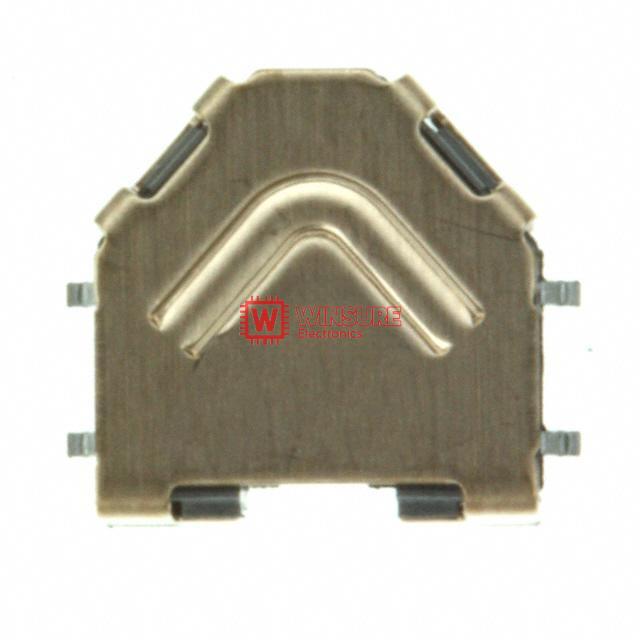
AHF23

Electronics Part Number

AHF23-WX
AHF23

Description

AHF2 Tip Switch for Tilt Detection

Inventory

680 Pcs New Original In Stock
Motion sensor transducers engineered for converting physical movement into electrical signals in automation and safety systems.
Quantity
Minimum 1

Purchase and inquiry

Quality Assurance

365 - Day Quality Guarantee - Every part fully backed.

90 - Day Refund or Exchange - Defective parts? No hassle.

Limited Stock, Order Now - Get reliable parts without worry.

Global Shipping & Secure Packaging

Worldwide Delivery in 3-5 Business Days

100% ESD Anti-Static Packaging

Real-Time Tracking for Every Order

Secure & Flexible Payment

Credit Card, VISA, MasterCard, PayPal, Western Union, Telegraphic Transfer(T/T) and more

All payments encrypted for security

RFQ (Request for Quotations)

Submit your RFQ directly on the product detail page or the RFQ page.

Our sales team will respond within 24 hours.

Payment method

PayPal (recommended for new customers)

Credit Cards

Wire Transfer (T/T) – Available in USD, EUR, HKD, and other currencies.

Important Notice

You'll receive a confirmation email after submitting an RFQ.

Didn't get it? Check your spam folder and whitelist Info@WINSURE-Electronics.com

Prices and stock may change; we'll reconfirm your order.

Questions? Contact us anytime.

Freight

Basic cost: USD 70.00

Actual cost may vary depending on weight and destination

Shipping method

Shipped from Hong Kong via FedEx/DHL/UPS/TNT

Delivery Time

In-stock items: Ready to ship in 1-2 days

Transit time: 3-5 business days (FedEx/DHL/UPS)

Special requests? Contact us: Info@WINSURE-Electronics.com

Request Quote (Ships tomorrow)
*Quantity
Minimum 1
num_del num_add
(*) (*) is mandatory
We'll get back to you within 24 hours

Technical Specifications

Category Motion Sensors, Accelerometers

Manufacturer STMicroelectronics

Packaging -

Operating Temperature -40°C ~ 85°C (TA)

Mounting Type Surface Mount

Package / Case 28-QFN Exposed Pad

Series -

Features Adjustable Bandwidth, Selectable Scale

Base Product Number LIS3

Product Status Obsolete

Type Digital

Bandwidth 10Hz ~ 640Hz

Output Type I2C, SPI

Voltage - Supply 2.16V ~ 3.6V

Axis X, Y, Z

Supplier Device Package 28-QFPN (7x7)

Acceleration Range ±2g, 6g

Sensitivity (LSB/g) 1024 (±2g) ~ 340 (±6g)

Sensitivity (mV/g) -

Data Sheet Document (D)

Datasheets Download LIS3LV02DQ-TR Product Specification (PDF)

HTML Datasheet LIS3LV02DQ-TR-DG

Design Resources Development Tool Selector

Environmental & Export Classification

RoHS Status ROHS3 Compliant

Moisture Sensitivity Level (MSL) 3 (168 Hours)

REACH Status REACH Unaffected

ECCN EAR99

HTSUS 8542.39.0001

Additional Information

Other Names 497-6346-2 497-6346-1 LIS3LV02DQTR 497-6346-6

Standard Package 2,300

Reviews

0.0/5.0-(Show up to 5 Ratings)
No reviews yet
Publish Evalution
* Product Rating
(Normal/Preferably/Outstanding, default 5 stars)
★★★★★
★★★★★
*Evalution Message
Please enter your review message.
Please post honest comments and do not post ilegal comments.

Frequently Asked Questions (FAQ)

FAQ Icon

Can I replace the obsolete LIS3LV02DQ-TR with the LIS331DLHTR in my existing 3-axis motion detection

While the LIS331DLHTR is listed as a substitute for the LIS3LV02DQ-TR, direct replacement requires careful evaluation. The LIS331DLHTR offers similar ±2g/±6g ranges and I2C/SPI interfaces, but it uses a different register map and lacks the LIS3LV02DQ-TR’s programmable bandwidth granularity (10–640Hz vs. fixed 100Hz/400Hz options). Additionally, the LIS331DLHTR comes in a 16-pin QFN (3x3mm), not the 28-QFPN (7x7mm) of the LIS3LV02DQ-TR, so PCB footprint incompatibility is likely. You’ll need to update firmware for register access and potentially revise the layout—conduct signal integrity and power-on sequencing tests to avoid initialization failures.
FAQ Icon

What are the key reliability risks when designing in the LIS3LV02DQ-TR given its MSL 3 rating and ex

The LIS3LV02DQ-TR’s MSL 3 (168-hour floor life) demands strict handling: exposure beyond this window without proper baking increases delamination and popcorning risk during reflow, especially with the 28-QFPN exposed pad acting as a thermal and moisture conduit. In high-humidity applications (e.g., outdoor IoT sensors), ensure conformal coating covers the package edges and avoid prolonged pre-assembly storage in uncontrolled environments. Also, verify that your reflow profile stays within ST’s recommended peak temperature (260°C max) to prevent internal bond wire damage—thermal stress on the exposed pad can degrade long-term mechanical stability and bias drift.
FAQ Icon

How does the LIS3LV02DQ-TR’s selectable scale (±2g vs ±6g) impact noise performance and resolution i

Selecting ±2g on the LIS3LV02DQ-TR gives 1024 LSB/g sensitivity, ideal for detecting subtle vibrations, but at the cost of reduced dynamic range. In low-vibration scenarios (e.g., pump bearing health monitoring), this higher resolution improves signal-to-noise ratio (SNR), enabling detection of early fault frequencies. However, if mechanical shocks exceed ±2g, the sensor saturates, corrupting data. Conversely, ±6g mode (340 LSB/g) sacrifices resolution but prevents clipping during transient events. Always validate expected acceleration peaks in your environment—use ±2g only when peak G-forces are confidently below 1.8g to maintain margin and avoid missed diagnostics.
FAQ Icon

Is the LIS3LV02DQ-TR suitable for battery-powered wearable devices considering its power characteris

The LIS3LV02DQ-TR can be used in wearables, but with caveats. Its 2.16V–3.6V supply range aligns well with single Li-ion cells, and standby current is low (~1µA), but active-mode current (~500µA) may limit runtime in always-on applications. Unlike newer ultra-low-power accelerometers (e.g., LIS2DH), it lacks built-in FIFO and advanced interrupt engines, forcing the MCU to poll frequently—increasing system-level power. Use SPI (not I2C) for faster data bursts to minimize active time, and leverage its adjustable bandwidth to reduce sampling rate (e.g., 50Hz instead of 640Hz) when high-frequency content isn’t needed. Consider duty cycling with external wake-up logic to extend battery life.
FAQ Icon

What design precautions are needed when routing the LIS3LV02DQ-TR’s I2C lines near high-speed digita

The LIS3LV02DQ-TR’s I2C interface is sensitive to crosstalk and ground bounce, especially when routed adjacent to high-speed clocks or switching regulators. Maintain at least 3x trace width spacing from noisy signals, and route I2C lines over a solid ground plane (Layer 2) to minimize loop area. Use series termination resistors (22–100Ω) near the sensor to dampen reflections, and avoid vias in the I2C path to reduce impedance discontinuities. Since the 28-QFPN has an exposed pad, ensure it’s solidly grounded with multiple thermal vias—floating ground increases susceptibility to EMI. Validate signal integrity with oscilloscope eye diagrams during prototype testing; glitches on SDA/SCL can cause I2C lockups requiring hard resets.
FAQ Icon

Can I replace the obsolete LIS3LV02DQ-TR with the LIS331DLHTR in my existing 3-axis motion detection

While the LIS331DLHTR is listed as a substitute for the LIS3LV02DQ-TR, direct replacement requires careful evaluation. The LIS331DLHTR offers similar ±2g/±6g ranges and I2C/SPI interfaces, but it uses a different register map and lacks the LIS3LV02DQ-TR’s programmable bandwidth granularity (10–640Hz vs. fixed 100Hz/400Hz options). Additionally, the LIS331DLHTR comes in a 16-pin QFN (3x3mm), not the 28-QFPN (7x7mm) of the LIS3LV02DQ-TR, so PCB footprint incompatibility is likely. You’ll need to update firmware for register access and potentially revise the layout—conduct signal integrity and power-on sequencing tests to avoid initialization failures.
FAQ Icon

What are the key reliability risks when designing in the LIS3LV02DQ-TR given its MSL 3 rating and ex

The LIS3LV02DQ-TR’s MSL 3 (168-hour floor life) demands strict handling: exposure beyond this window without proper baking increases delamination and popcorning risk during reflow, especially with the 28-QFPN exposed pad acting as a thermal and moisture conduit. In high-humidity applications (e.g., outdoor IoT sensors), ensure conformal coating covers the package edges and avoid prolonged pre-assembly storage in uncontrolled environments. Also, verify that your reflow profile stays within ST’s recommended peak temperature (260°C max) to prevent internal bond wire damage—thermal stress on the exposed pad can degrade long-term mechanical stability and bias drift.
FAQ Icon

How does the LIS3LV02DQ-TR’s selectable scale (±2g vs ±6g) impact noise performance and resolution i

Selecting ±2g on the LIS3LV02DQ-TR gives 1024 LSB/g sensitivity, ideal for detecting subtle vibrations, but at the cost of reduced dynamic range. In low-vibration scenarios (e.g., pump bearing health monitoring), this higher resolution improves signal-to-noise ratio (SNR), enabling detection of early fault frequencies. However, if mechanical shocks exceed ±2g, the sensor saturates, corrupting data. Conversely, ±6g mode (340 LSB/g) sacrifices resolution but prevents clipping during transient events. Always validate expected acceleration peaks in your environment—use ±2g only when peak G-forces are confidently below 1.8g to maintain margin and avoid missed diagnostics.
FAQ Icon

Is the LIS3LV02DQ-TR suitable for battery-powered wearable devices considering its power characteris

The LIS3LV02DQ-TR can be used in wearables, but with caveats. Its 2.16V–3.6V supply range aligns well with single Li-ion cells, and standby current is low (~1µA), but active-mode current (~500µA) may limit runtime in always-on applications. Unlike newer ultra-low-power accelerometers (e.g., LIS2DH), it lacks built-in FIFO and advanced interrupt engines, forcing the MCU to poll frequently—increasing system-level power. Use SPI (not I2C) for faster data bursts to minimize active time, and leverage its adjustable bandwidth to reduce sampling rate (e.g., 50Hz instead of 640Hz) when high-frequency content isn’t needed. Consider duty cycling with external wake-up logic to extend battery life.
FAQ Icon

What design precautions are needed when routing the LIS3LV02DQ-TR’s I2C lines near high-speed digita

The LIS3LV02DQ-TR’s I2C interface is sensitive to crosstalk and ground bounce, especially when routed adjacent to high-speed clocks or switching regulators. Maintain at least 3x trace width spacing from noisy signals, and route I2C lines over a solid ground plane (Layer 2) to minimize loop area. Use series termination resistors (22–100Ω) near the sensor to dampen reflections, and avoid vias in the I2C path to reduce impedance discontinuities. Since the 28-QFPN has an exposed pad, ensure it’s solidly grounded with multiple thermal vias—floating ground increases susceptibility to EMI. Validate signal integrity with oscilloscope eye diagrams during prototype testing; glitches on SDA/SCL can cause I2C lockups requiring hard resets.

Quality Assurance (QC)

WINSURE ensures the quality and authenticity of every electronic component through professional inspections and batch sampling, guaranteeing reliable sourcing, stable performance, and compliance with technical specifications, helping customers reduce supply chain risks and confidently use components in production.

Quality Assurance
Counterfeit and defect prevention

Counterfeit and defect prevention

Visual and packaging inspection

Electrical performance verification

Electrical performance verification

Life and reliability evaluation

Life and reliability evaluation

WINSURE Certification
ISO 209001_2015
ISO 209001_2015
ISO 14001_2015
ISO 2014001_2015
ISO 45001_2018
ISO 2045001_2018
DUNS REGISTERED
DUNS REGISTERED
Companines Registry
Companines Registry
ASA Certificate
ASA Certificate
UKAS
UKAS
ESD Certificate
ESD Certificate
Blogs & Posts
whatsapp-icons Chat online
RFQ List ({0} Items)

You can add multiple products here.

  • It is empty.
del Clear All Products
Compare List ({0} Items)

You can add multiple products here.

  • It is empty.
del Clear All Products