0.0 / 5.0 - (0 Ratings)

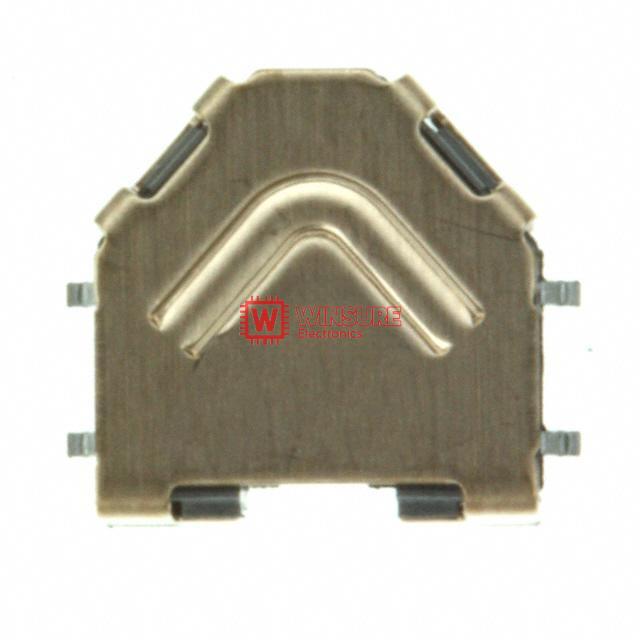
D6B-2

Electronics Part Number

D6B-2-WX

Manufacturer

Silicon Labs
D6B-2

Description

1mA SMD Tilt Sensor, 35-65°, Gull Wing

Inventory

800 Pcs New Original In Stock
Sensors and transducers specialized in motion detection, enabling responsive control in cameras, lighting, and alarm systems.
Quantity
Minimum 1

Purchase and inquiry

Quality Assurance

365 - Day Quality Guarantee - Every part fully backed.

90 - Day Refund or Exchange - Defective parts? No hassle.

Limited Stock, Order Now - Get reliable parts without worry.

Global Shipping & Secure Packaging

Worldwide Delivery in 3-5 Business Days

100% ESD Anti-Static Packaging

Real-Time Tracking for Every Order

Secure & Flexible Payment

Credit Card, VISA, MasterCard, PayPal, Western Union, Telegraphic Transfer(T/T) and more

All payments encrypted for security

RFQ (Request for Quotations)

Submit your RFQ directly on the product detail page or the RFQ page.

Our sales team will respond within 24 hours.

Payment method

PayPal (recommended for new customers)

Credit Cards

Wire Transfer (T/T) – Available in USD, EUR, HKD, and other currencies.

Important Notice

You'll receive a confirmation email after submitting an RFQ.

Didn't get it? Check your spam folder and whitelist Info@WINSURE-Electronics.com

Prices and stock may change; we'll reconfirm your order.

Questions? Contact us anytime.

Freight

Basic cost: USD 70.00

Actual cost may vary depending on weight and destination

Shipping method

Shipped from Hong Kong via FedEx/DHL/UPS/TNT

Delivery Time

In-stock items: Ready to ship in 1-2 days

Transit time: 3-5 business days (FedEx/DHL/UPS)

Special requests? Contact us: Info@WINSURE-Electronics.com

Request Quote (Ships tomorrow)
*Quantity
Minimum 1
num_del num_add
(*) (*) is mandatory
We'll get back to you within 24 hours

Technical Specifications

Category Optical Sensors, Ambient Light, IR, UV Sensors

Manufacturer Silicon Labs

Packaging Strip

Operating Temperature -40°C ~ 85°C

Mounting Type Surface Mount

Package / Case 10-WFQFN

Series -

Base Product Number SI1141

Product Status Active

Type Ambient

Output Type I2C

Voltage - Supply 1.71V ~ 3.6V

Supplier Device Package 10-QFN (2x2)

Wavelength -

Proximity Detection Yes

Data Sheet Document (D)

Datasheets Download SI1141-A11-GM Product Specification (PDF)

HTML Datasheet SI1141-A11-GM-DG

Design Resources SI114x Designer Guide

Environmental & Export Classification

RoHS Status ROHS3 Compliant

Moisture Sensitivity Level (MSL) 3 (168 Hours)

ECCN EAR99

HTSUS 8542.39.0001

Additional Information

Other Names -SI1141-A11-GM

Standard Package 100

Reviews

0.0/5.0-(Show up to 5 Ratings)
No reviews yet
Publish Evalution
* Product Rating
(Normal/Preferably/Outstanding, default 5 stars)
★★★★★
★★★★★
*Evalution Message
Please enter your review message.
Please post honest comments and do not post ilegal comments.

Frequently Asked Questions (FAQ)

FAQ Icon

What are the key design-in risks when using the SI1141-A11-GM in a low-light ambient sensing applica

When integrating the SI1141-A11-GM in low-light environments with nearby LED sources, a key risk is signal corruption due to the sensor's high sensitivity to pulsed light. The SI1141-A11-GM uses photodiodes with integration-based measurement, making it susceptible to aliasing from PWM-driven LEDs (e.g., from displays or indicators). To mitigate, synchronize the sensor’s measurement intervals with the LED PWM frequency via I2C software timing control when possible, or apply optical filtering. Also verify operation near the 1.71V supply minimum, as ADC noise increases at lower VDD, reducing measurement fidelity in dim conditions. Always validate readings under real-world lighting during prototyping.
FAQ Icon

How does the SI1141-A11-GM compare to the VEML7700 in terms of proximity detection accuracy and powe

The SI1141-A11-GM offers superior proximity detection versatility compared to the VEML7700 due to its integrated IR LED driver and support for external emitters, enabling custom range tuning (up to ~15cm) ideal for wearables. The VEML7700 lacks a driver, limiting passive detection. However, the VEML7700 typically consumes less active current (~150µA vs ~330µA for SI1141-A11-GM at 1Hz sampling). For battery-critical designs, the SI1141-A11-GM’s programmable measurement rate and interrupt-driven I2C wake-up provide better system-level power savings if managed correctly. Consider the footprint: the SI1141-A11-GM’s 2x2mm QFN saves space over larger rivals but requires careful PCB layout for thermal and EMI isolation if driving external IR LEDs.
FAQ Icon

Can the SI1141-A11-GM replace the discontinued OPT3001 in ambient light sensing modules, and what ci

While the SI1141-A11-GM can substitute the OPT3001 for ambient light sensing, critical differences require circuit and firmware adjustments. Unlike the OPT3001, the SI1141-A11-GM lacks a precision logarithmic response and instead outputs digital counts requiring calibration to lux using empirical data. You must recharacterize the lux curve under target light sources. Additionally, the SI1141-A11-GM uses a different I2C addressing scheme and requires pull-ups compatible with 1.71V logic levels. No external IR blocking filter may be needed since the SI1141-A11-GM includes on-chip IR compensation, but validate color rendering index (CRI) accuracy in final assembly.
FAQ Icon

What PCB layout practices minimize crosstalk in proximity mode when using the SI1141-A11-GM with an

To reduce optical crosstalk when using the SI1141-A11-GM with an external IR LED, maintain at least 4mm center-to-center spacing between the sensor and LED, oriented at a 15–20° inward tilt. Place a physical light barrier (e.g., molded ridge or opaque adhesive) between them on the PCB. Use a ground-filled moat under and between the components with stitching vias to suppress substrate coupling. Route the LED current trace with Kelvin connections and limit drive duration via the SI1141-A11-GM’s programmable LED pulse settings to minimize thermal drift. Avoid reflective solder mask; use dark, matte finish. Validate with mechanical mockups before final design release.
FAQ Icon

What long-term reliability concerns should be addressed when deploying the SI1141-A11-GM in industri

For industrial deployment, the SI1141-A11-GM’s -40°C to 85°C rating meets many requirements, but repeated thermal cycling can stress the 10-QFN package due to CTE mismatch with PCB materials. To enhance reliability, use an underfill or localized conformal coating to mitigate solder fatigue. The MSL-3 rating requires baking if stored over 168 hours in >60% humidity; control storage and board assembly scheduling. Also, ensure I2C bus robustness—add ESD protection (e.g., SEMTECH RClamp0524P) on SDA/SCL lines, as the SI1141-A11-GM’s I/Os are rated for only 2V absolute max. Monitor I2C clock stretching behavior over temperature to avoid bus lockups in firmware.
FAQ Icon

What are the key design-in risks when using the SI1141-A11-GM in a low-light ambient sensing applica

When integrating the SI1141-A11-GM in low-light environments with nearby LED sources, a key risk is signal corruption due to the sensor's high sensitivity to pulsed light. The SI1141-A11-GM uses photodiodes with integration-based measurement, making it susceptible to aliasing from PWM-driven LEDs (e.g., from displays or indicators). To mitigate, synchronize the sensor’s measurement intervals with the LED PWM frequency via I2C software timing control when possible, or apply optical filtering. Also verify operation near the 1.71V supply minimum, as ADC noise increases at lower VDD, reducing measurement fidelity in dim conditions. Always validate readings under real-world lighting during prototyping.
FAQ Icon

How does the SI1141-A11-GM compare to the VEML7700 in terms of proximity detection accuracy and powe

The SI1141-A11-GM offers superior proximity detection versatility compared to the VEML7700 due to its integrated IR LED driver and support for external emitters, enabling custom range tuning (up to ~15cm) ideal for wearables. The VEML7700 lacks a driver, limiting passive detection. However, the VEML7700 typically consumes less active current (~150µA vs ~330µA for SI1141-A11-GM at 1Hz sampling). For battery-critical designs, the SI1141-A11-GM’s programmable measurement rate and interrupt-driven I2C wake-up provide better system-level power savings if managed correctly. Consider the footprint: the SI1141-A11-GM’s 2x2mm QFN saves space over larger rivals but requires careful PCB layout for thermal and EMI isolation if driving external IR LEDs.
FAQ Icon

Can the SI1141-A11-GM replace the discontinued OPT3001 in ambient light sensing modules, and what ci

While the SI1141-A11-GM can substitute the OPT3001 for ambient light sensing, critical differences require circuit and firmware adjustments. Unlike the OPT3001, the SI1141-A11-GM lacks a precision logarithmic response and instead outputs digital counts requiring calibration to lux using empirical data. You must recharacterize the lux curve under target light sources. Additionally, the SI1141-A11-GM uses a different I2C addressing scheme and requires pull-ups compatible with 1.71V logic levels. No external IR blocking filter may be needed since the SI1141-A11-GM includes on-chip IR compensation, but validate color rendering index (CRI) accuracy in final assembly.
FAQ Icon

What PCB layout practices minimize crosstalk in proximity mode when using the SI1141-A11-GM with an

To reduce optical crosstalk when using the SI1141-A11-GM with an external IR LED, maintain at least 4mm center-to-center spacing between the sensor and LED, oriented at a 15–20° inward tilt. Place a physical light barrier (e.g., molded ridge or opaque adhesive) between them on the PCB. Use a ground-filled moat under and between the components with stitching vias to suppress substrate coupling. Route the LED current trace with Kelvin connections and limit drive duration via the SI1141-A11-GM’s programmable LED pulse settings to minimize thermal drift. Avoid reflective solder mask; use dark, matte finish. Validate with mechanical mockups before final design release.
FAQ Icon

What long-term reliability concerns should be addressed when deploying the SI1141-A11-GM in industri

For industrial deployment, the SI1141-A11-GM’s -40°C to 85°C rating meets many requirements, but repeated thermal cycling can stress the 10-QFN package due to CTE mismatch with PCB materials. To enhance reliability, use an underfill or localized conformal coating to mitigate solder fatigue. The MSL-3 rating requires baking if stored over 168 hours in >60% humidity; control storage and board assembly scheduling. Also, ensure I2C bus robustness—add ESD protection (e.g., SEMTECH RClamp0524P) on SDA/SCL lines, as the SI1141-A11-GM’s I/Os are rated for only 2V absolute max. Monitor I2C clock stretching behavior over temperature to avoid bus lockups in firmware.

Quality Assurance (QC)

WINSURE ensures the quality and authenticity of every electronic component through professional inspections and batch sampling, guaranteeing reliable sourcing, stable performance, and compliance with technical specifications, helping customers reduce supply chain risks and confidently use components in production.

Quality Assurance
Counterfeit and defect prevention

Counterfeit and defect prevention

Visual and packaging inspection

Electrical performance verification

Electrical performance verification

Life and reliability evaluation

Life and reliability evaluation

WINSURE Certification
ISO 209001_2015
ISO 209001_2015
ISO 14001_2015
ISO 2014001_2015
ISO 45001_2018
ISO 2045001_2018
DUNS REGISTERED
DUNS REGISTERED
Companines Registry
Companines Registry
ASA Certificate
ASA Certificate
UKAS
UKAS
ESD Certificate
ESD Certificate
Blogs & Posts
whatsapp-icons Chat online
RFQ List ({0} Items)

You can add multiple products here.

  • It is empty.
del Clear All Products
Compare List ({0} Items)

You can add multiple products here.

  • It is empty.
del Clear All Products